





A System Designed for Stability, Now Facing Volatility
The current banking system is the product of a time when economic fluctuations were not too big. The central banks of the countries regulated the inflation and the governments kept their monetary and fiscal policies in check. The process of globalization reduced production costs and assured the reliability of the supply chains. Growth was made possible without the danger of triggering an economic crisis through credit expansion. This whole scheme is still there but is rapidly unraveling now.
Global debt is at an overwhelming level and has exceeded the previous record by a large margin. Governments were already in a tense situation as a result of their heavy borrowing during the pandemic and are now struggling more due to rising interest rates. Inflation has been more stubborn than what the central banks thought. The lifting of restrictions and the current state of trade and power relations have resulted in the re-routing of shipping, the rerunning of energy, and the reallocation of money. The big banks have to adjust their operations to accommodate the changing times; the days of easy money from low interest rates and great liquidity are gone.
New costs of funding, rigorous regulations, and reduced revenue are all part of the current banking scene. However, on the other hand, it is the depositors who are the most affected since they are trying to keep track of the worth of their savings in relation to the prevailing inflation rate and thus are developing a sense of mistrust towards the financial system. The public’s faith in the conventional banking system is diminishing. Cryptocurrencies on the other hand were created with the idea of volatility, fragmentation, and uncertainty. They do not depend on the credibility of the government or the stability of the institution. They are working 24/7 globally and very clearly through the decentralization of networks.
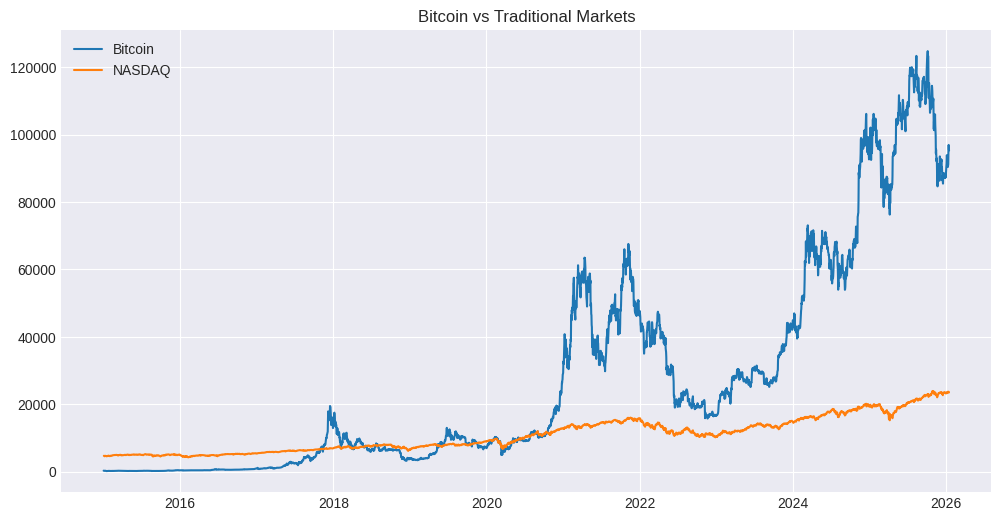
Why Code Outperforms Institutions in Uncertain Times
Hierarchical is the traditional finance system with the decision-making power running from the central banks down to the consumers via the commercial banks. The changes in the financial policies need to be well-coordinated, politically approved, and regulatory compliant at the same time. On the opposite side of the coin, the world of cryptocurrencies is governed by algorithms. The enforcement of the rules happens automatically through the code. The monetary policies are implanted into the protocols.
There are no intermediaries during the settlements of transactions. The systems are running all day and night, and they are accessible anywhere in the world.This distinction between traditional and crypto finance really counts in a scenario where trust is easily broken.Banks are built on trust, whereas Crypto is built on trust through proof.Bitcoin’s supply is limited and is totally open to the public for viewing. No power can be exercised over it by any central entity. The backing of stablecoins can be verified through blockchain-based audits. Smart contracts carry out instructions literally spoken in the programming language, without any discretion or bias at all. In such a situation of rising uncertainty, predictability becomes quite a valuable asset. Through mathematics, not through promises, code provides the predictability.
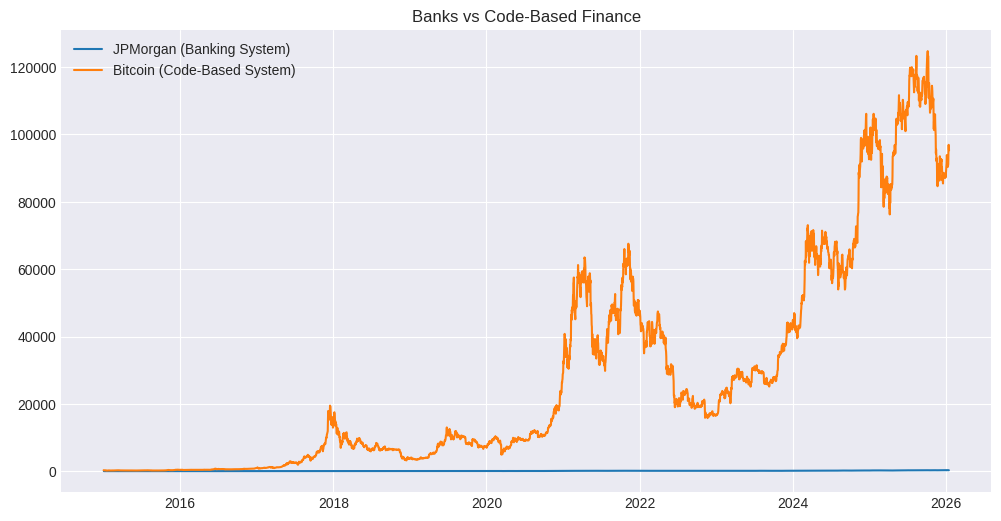
The Shift from Institutional Trust to System Trust
The classic financial system is grounded on the trust of institutions. The public trusts banks due to their regulations, good reputation, and government approval. On the other hand, crypto relies on system trust. Users put their trust in protocols for they are open, validatable, and have fixed outcomes. This is indicative of a larger societal change.
The younger generations are the ones who trust technology more than institutions. They opt for systems that can be audited in real-time over organizations that require blind faith.Certainly, blockchain networks are able to provide public, immutable records of transactions, reserves, and monetary rules. In a time where trust is regularly put to the test, being able to validate becomes a form of power. Trust is not given anymore. It is made.
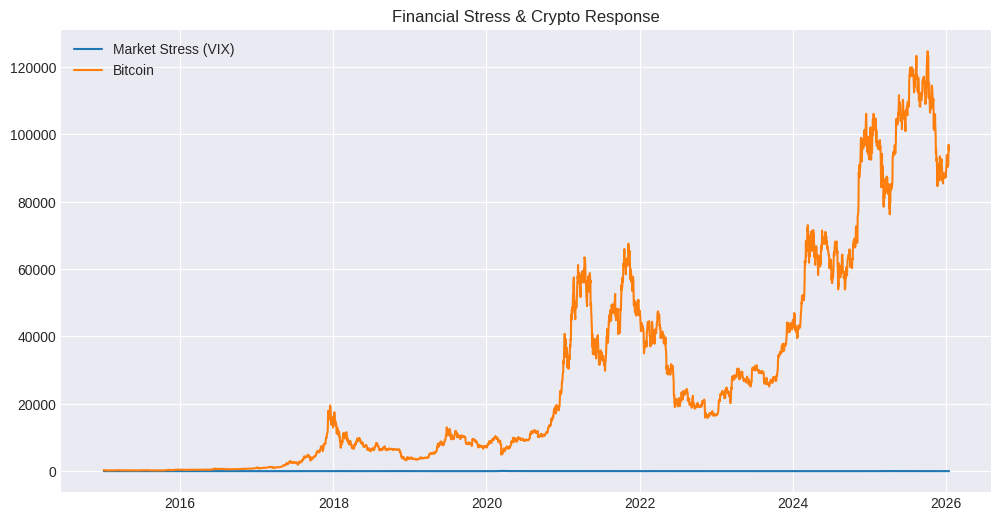
How the Global Economy Is Adapting
It is no longer a matter of theory when it comes to the adoption of blockchain-based finance, as it is already taking place at various levels within the financial system. Traditional players are not opposing the integration of digital currency infrastructures; on the contrary, they are going for it. The topmost banks are already considering the hypothetical situations of settlements through the technology, allocation and trading of tokenized assets, and digital custody services.
The asset managers are at it with the issuing of tokenized funds and bonds while the governments are busy doing their research on the digital currencies and public finance systems based on blockchain technology. On the other hand, individuals are resorting to the use of crypto for international money transfers, protecting their wealth against inflation, generating interest, and gaining access to finance without going through the banking system. In places where the currencies are unstable, there are capital controls or weak institutions, the adoption of crypto is moving at an exponential rate. However, it is a gradual process; crypto is not replacing banks; it is replacing their functions only. The activities of payments, lending, custody, settlement, and asset issuance are more and more being conducted through code rather than through human institutions.
Crypto as Financial Infrastructure, Not Speculation
At first, the whole idea about cryptocurrencies was just their price volatility and speculation. But this idea is changing now. Cryptocurrencies are making it possible for us to do decentralized lending, global payments, digital identity, asset tokenization, and programmable finance. They are removing intermediaries, borders, and banking hours from the operation of financial services. The so-called decentralized finance gives the opportunity to the users to borrow, lend, and also earn interest without going through the traditional banking system.
On the other hand, stablecoins are the digital dollars that can be transferred around the globe instantly. Besides, tokenization is the process that makes the real-world assets to be represented and traded on the blockchain networks. All this so far is not just a speculative experiment but the building of a parallel financial infrastructure. The prices of cryptocurrencies are not disturbing the financial system but rather the technology behind cryptocurrencies is making it possible to redesign the system.
The Role of Crypto in a Fragmented World
The process of globalization has come a long way and is now not just economic but mainly political. Trade prohibitions, sanctions, and the forming of political alliances among regions are all taking their toll on the movement of capital. Financial access is now more influenced by factors such as location, nationality, and regulations. On the other hand, the cryptocurrency market is a neutral ground. The blockchain networks treat all users the same regardless of their geographic location.
They don’t consider people’s countries of origin. They don’t care about one’s political preference. Internet users from all corners of the world can simply join in the fun. In the world that is divided into so many different factions, being neutral has great value. The crypto system does not support financial inclusion through handouts but rather through its underlying structure.
The Energy, AI, and Digital Economy Connection
The future economy will surely be digital, automatic, and dependent on data. AI systems will need to have as a prerequisite features like programmable payments, micro-transactions, and global financial interoperability. Furthermore, digital platforms will demand instant settlement and automated contracts. Nevertheless, traditional banking systems were incapable of handling the future scenario. However, a cryptocurrency-based infrastructure will provide the necessary foundation for programmable money, machine-to-machine payments, and quick settlements. Besides, financial logic will be subject to automation through smart contracts.
Moreover, tokenized assets will be allowed to take direct entry into digital ecosystems. The ongoing human-like shifts in the AI-powered labor market and business models impose changes in finance that are more flexible, quicker, and programmable. In fact, code-based finance is the one that will be adapted to the future best.
Why Regulation Isn’t Stopping Crypto It’s Shaping It
No governmental actions aimed at completely removing crypto from the market are taking place, but rather trying to accommodate it through the introduction of regulations. Government regulations are changing the positioning of crypto from an unstable technology to a financial layer that people accept.
The legalization of practices, adherence to certain standards, and provision of institutional products are making clear the position of crypto in international markets. The situation is not hopeless for decentralization; on the contrary, it will grow through the integration process. Meanwhile, crypto has slowly transformed from a revolutionary tool to a major support component of the system.
The Psychological Shift in How People View Money
Money has changed its role and is no longer just a storage of value. It has become a digital instrument. Instant, worldwide, and open movement of money is the new normal and users desire that their assets are under their control. They also desire to know how the system operates. Cryptocurrency is the perfect match with such a mental attitude.
Users do not rely on the intermediaries, but rather they engage directly with the protocols. No more waiting for approval as the transactions are executed automatically. Systems become the source of people’s trust over institutions. The financial psychology is going from delegation to self-sovereignty.
The New Financial Reality
We are stepping into a time characterized by continuous inflation, large global debts, political unrest, technological upheavals, and lack of trust in institutions. Centralized systems are having a hard time adjusting swiftly to this intricacy. Cryptocurrency is developing through open-source innovation, global involvement, and fast iteration. Coding is upscaling quicker than organizations.
Final Thought
Banks were made for the industry economy.
Crypto was made for the digital economy.
The finance of the future will not depend on infrastructures, geographical limits, or red tape. Instead, it will be the domain of algorithms, protocols, and cryptographic systems.
In the future, banks will not be utilized, but code will instead.


