




Trade wars are rarely priced as single-asset events. When tariffs rise, capital does not simply rotate from exporters to domestic producers. Instead, volatility propagates across currencies, bonds, equities, and increasingly, digital assets.Crypto does not respond to tariffs directly. Bitcoin is not exported. Ethereum is not taxed at customs. Yet trade restrictions alter inflation expectations, currency stability, capital flows, and risk appetite all of which influence crypto through second-order effects.In modern markets, tariffs act less like policy tools and more like volatility shocks. Their real impact is not what they restrict, but what they destabilize.
Tariffs as a Macro Volatility Trigger
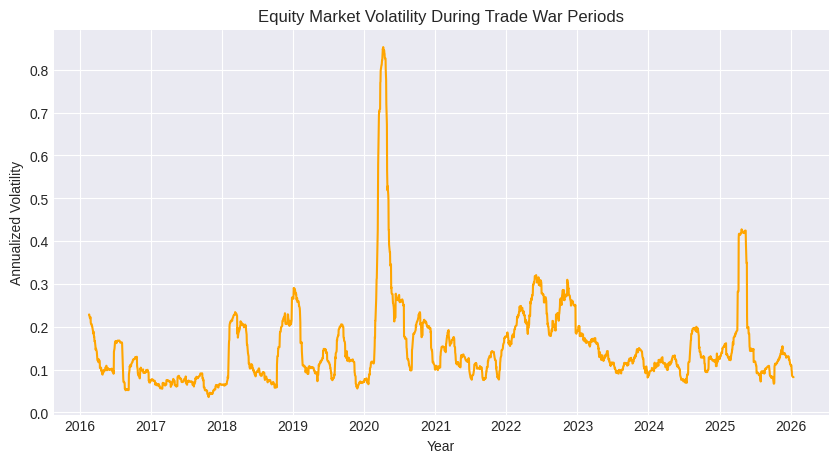
Tariffs are, historically, signals of political disputes, economic division, and increased costs for producers. The markets view them as a mixture of inflationary pressure and a risk of reduced economic appetite. This mixture compels the central banks to take a hard decision: either they let inflation run or they tighten up in the midst of slowing economies. Both scenarios create uncertainties and uncertainty produces volatility. Volatility, in turn, changes the behavior of capital.
Stock markets experience a squeeze on their margins. The foreign exchange market shows the possibility of geopolitical risks. The bond market yields are influenced by the expectations of inflation. The availability of money in the financial market becomes more choosy. In this scenario, crypto is not a direct victim of tariffs, but rather a beneficiary of the financial aftershocks that tariffs produce.
The Transmission Mechanism into Crypto
Through three primary financial channels, tariffs have an impact on cryptocurrency. First, inflation expectations. Tariffs increase import prices, which in turn is passed on to the consumer price index (CPI). Higher inflation results in fiat currencies losing their value, leading to some capital being pushed towards hard or alternative assets. Bitcoin has a positive correlation with falling monetary credibility but not with increasing trade barriers. Second, the effect of tariffs on their prices and crypto volatility. Trade wars put pressure on the exchange rates, especially in the case of emerging markets. When local currencies take a hit, the adoption of cryptocurrencies is often seen as a hedge against domestic instability and thus ‘indirectly’ but ‘powerfully’ grows.
Third, risk perception. Tariffs result in geopolitical uncertainty, which comes along with risk-off behavior. Cryptocurrency usually gets sold off just like stocks during the early shocks. However, as soon as the macroeconomic narrative changes towards monetary easing or currency debasement, cryptocurrency tends to recover more quickly. Crypto is not the one that leads the reactions to the trade war. Instead, it absorbs them.
Why Crypto Is a Second-Order Asset
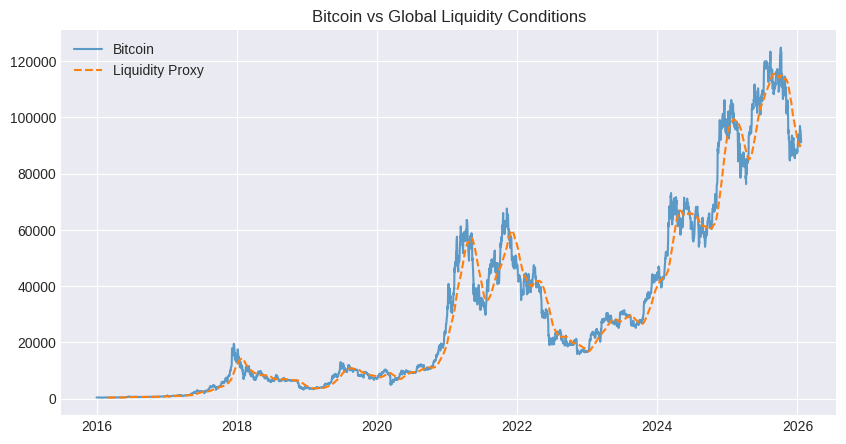
Crypto, in contrast to oil, steel, or semiconductors, is not integrated into the global supply chains. It is on the contrary integrated into the global liquidity conditions.Tariffs have an impact on supply chains.Monetary policy affects liquidity.Liquidity affects crypto.This results in digital assets being put into a second-order position.
They are affected by the trade policy consequences rather than the policy itself.In the initial phases of the trade war, crypto frequently acts as a risk asset. Tight financial conditions lead to the unwinding of leverage and decrease in prices.In the later stages, when the central banks react with stimulus or cuts in interest rates, crypto starts to act like a hedge. Liquidity comes back, and the alternative investments are the ones that gain the most.The asset does not change. The situation does change.
Modeling the Volatility Shock
From a quantitative point of view, tariffs don’t act as structural price drivers, but rather as volatility impulses of the market. They make the macroeconomic environment more uncertain, resulting in wider option-implied volatility and the distortion of asset classes’ correlations. The relationship of cryptocurrencies with stocks usually gets stronger in the very first stage of the tariff shock, which shows that systemic risk is present.
However, later on, the tie between crypto and stocks becomes looser as crypto again becomes sensitive to liquidity and monetary conditions. This characteristic often causes traders to view crypto as an asset that responds mainly to overall market volatility rather than to tariffs. The market does not factor in tariffs. It instead factors in the response to tariffs.
The Liquidity Feedback Loop
The trade wars have a negative impact on economic confidence. Confidence determines the monetary policy. Monetary policy dictates the liquidity situation. Liquidity is the driving force behind crypto. When tariffs put the economy at risk, banks become more forgiving and start giving out easier loans. Revived financial conditions attract speculators, raise the demand for loans, and thus, help digital currencies’ prices. Crypto is not a protector against tariffs. It is a protector against monetary actions. That is the reason why crypto usually does not perform well during the phase of trade restrictions announcement but does so during the subsequent policy adjustment phase.
Strategic Implications for Investors
The perspective of using crypto as a direct geopolitical hedge misjudges the situation completely. Crypto is not a shield against taxes or quotas and it is not a good idea to look at the situation this way. The monetary reaction functions should be used for this case. The important factors in this case are not the amounts of trade or the tariff rates, but the inflation paths, the stability of currencies, and the liquidity policies of central banks. Cryptocurrencies in a trade war scenario do not act like gold but are rather acknowledged as a liquidity-sensitive macro asset that is hedged on the policy easing.


