



Table of Contents
Geopolitical shocks are increasingly reshaping crypto, gold and equities markets, with a new report from Bitget and Block Scholes showing that traders are turning to tokenized markets to hedge macro risk when traditional venues are closed.
The report, “Tokenized Markets on Bitget UEX: How Traders Are Using 24/7 Real-World Assets for Real-Time Macro Hedging,” looked at trading patterns during the unstable opening months of 2026 and found that recent market moves showed how quickly political and military events can affect all types of assets.
Bitcoin stayed closely tied to U.S. equities, gold swung between haven demand and liquidation pressure, and tokenized versions of traditional assets drew traders looking to respond to headlines in real time.
Geopolitics Redraws the Market Map
According to the report, macro and geopolitical developments have become one of the defining forces behind price action this year. Bitcoin was down about 15% year-to-date and was trading around 40% below its all-time high, even as the S&P 500 was up 1.6%, showing how sharply crypto underperformed despite its elevated correlation with U.S. equities.
The report said that divergence was compounded by the lingering fallout from the October 10, 2025 liquidation event, when $19 billion was wiped out and 1.6 million traders were liquidated. Gold, meanwhile, remained more defensive, while silver behaved more like a speculative asset, sliding from $120 to $98 during the broader selloff.
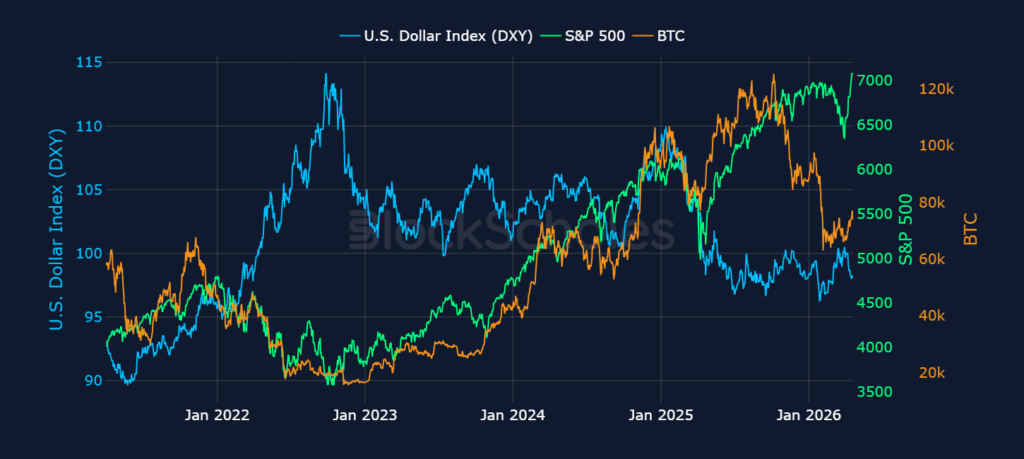
The report noted that President Donald Trump’s foreign policy moves, particularly in Venezuela and later Iran, added another layer of uncertainty to a market already unsettled by AI fears and tighter financial conditions. That combination, it argued, made it harder for investors to price not only individual assets but also the relationship between them, even as BTC’s correlation with the S&P 500 and Nasdaq 100 climbed to its highest level since November 2025.
Weekend Shocks Test 24/7 Markets
A central argument in the report is that geopolitical events unfolding outside normal trading hours are beginning to reshape how hedging happens. When the United States announced strikes on Iran over a weekend, major traditional markets were shut, leaving tokenized and crypto-native products among the few venues still available for immediate reaction.
Bitget’s XAUUSDT perpetual rose to $5,402 after the announcement, up 2.3% from Bloomberg’s Friday spot close of $5,279. When traditional markets reopened, Bloomberg spot gold opened at $5,315, while Bitget’s gold perpetual was trading at $5,329, leaving a spread of $13.29.
Trading activity also accelerated sharply, with the report saying minutely gold perpetual volume was around $200,000 before the Iran announcement, then climbed above $2 million within two hours and rose past $7 million later as prices advanced.
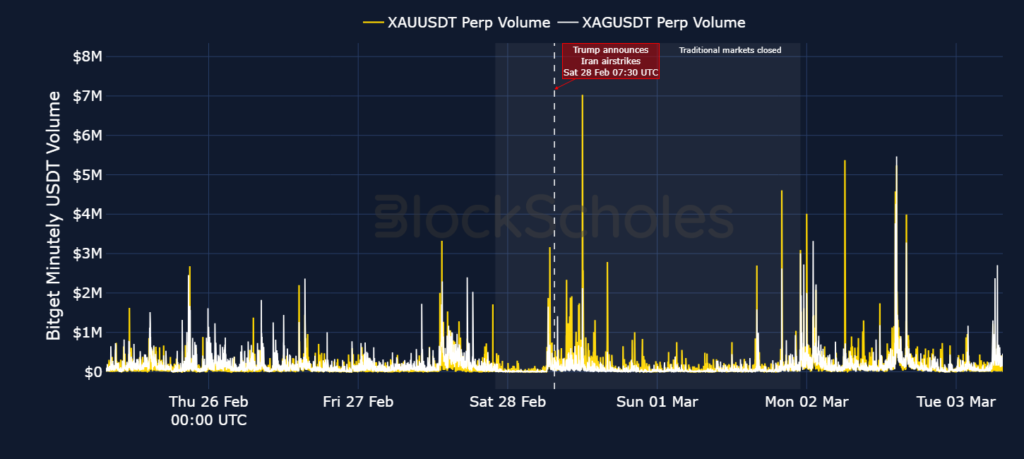
That stood in contrast with the earlier U.S. intervention in Venezuela, when on-chain gold prices barely moved over the weekend and only followed spot prices higher after global markets reopened. During that event, hourly volumes in Bitget’s gold perpetuals rose more than sixfold to about $200,000, but the report said liquidity was still too thin for meaningful weekend price discovery.
Bitcoin Still Dominates, but New Hedges Are Emerging
Even as tokenized markets grow, bitcoin remains the most-traded asset on the platform by overall activity, the report said. Still, it argued that traders are increasingly rotating between crypto and traditional exposures rather than treating them as separate worlds. Bitget said its TradFi platform reached $2 billion in daily trading volume within three days of launch, doubled to $4 billion by Jan. 21, and later posted a single-day high above $6 billion on March 20 as volatility hit gold and oil markets.
The report also highlighted strong regional differences in trading behavior. Southeast Asia accounted for 26.2% of active traders, followed by South Asia at 20.5% and the Middle East and Africa at 18.4%.
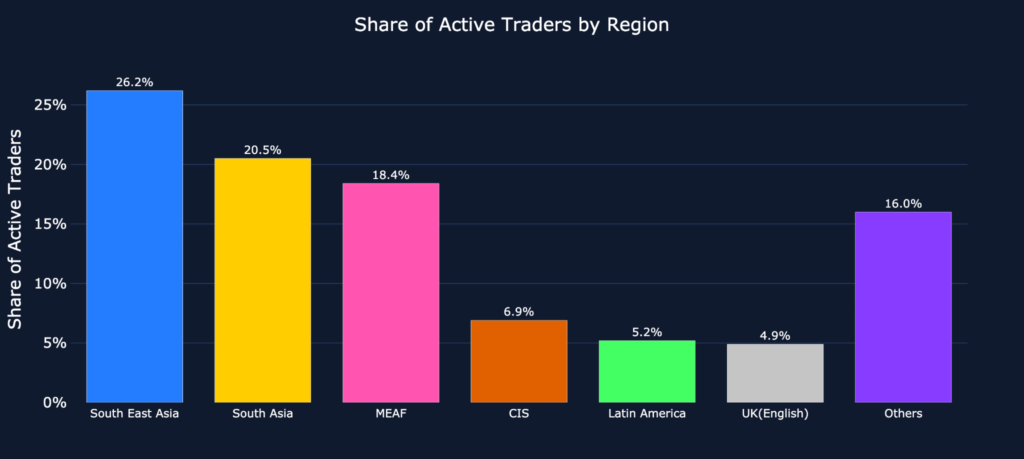
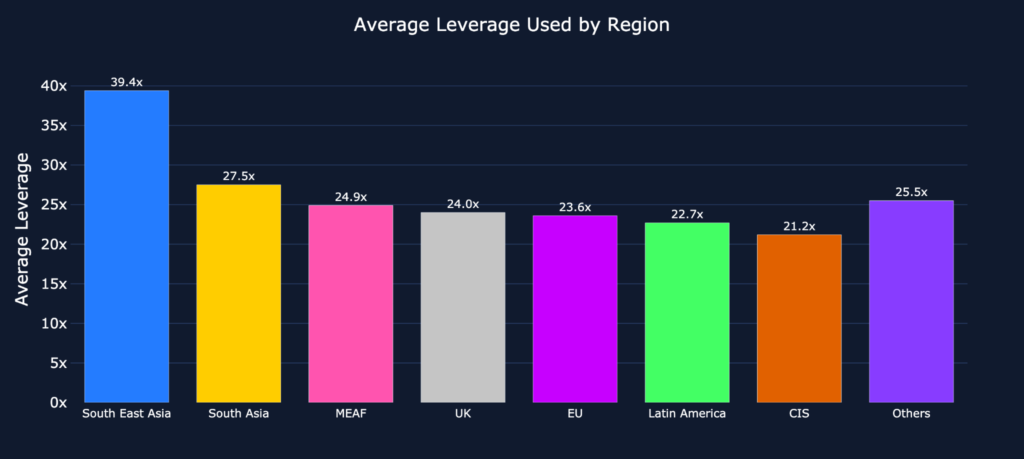
However, in tokenized real-world assets specifically, Southeast Asia accounted for 81.9% of total RWA trade volume on Bitget. The region also recorded the highest average leverage, at 39.4x, a sign that price action in those products is still being shaped heavily during Asian hours.
Market Structure Starts to Shift
The report suggests that the ability to move between crypto and traditional exposures without waiting for market open hours is becoming more important as geopolitical events increasingly trigger cross-asset volatility. In that environment, tokenized markets are starting to act not just as a niche product, but as an early venue for hedging and price discovery.
However, the shift remains uneven, as liquidity is still concentrated in certain regions and instruments, though the contrast between the Venezuela and Iran episodes suggests tokenized markets are becoming more responsive during periods of geopolitical stress.