




Key Takeaways
- Monetary Authority of Singapore (MAS) said only fully regulated stablecoins would qualify for large scale settlement, citing repeated failures by unregulated tokens to maintain their pegs.
- The regulator said its new stablecoin framework was complete, with legislation to focus on reserve quality and reliable redemption.
- Singapore advanced wholesale CBDC use, as the country’s three major banks completed overnight interbank loans using a live issued digital Singapore dollar.
- MAS said tokenization was moving into commercial use but warned that broader adoption would depend on shared standards, interoperable networks and stable settlement assets.
- AI governance became a priority, with MAS issuing draft guidelines, an industry handbook and a skills roadmap for workers adapting to AI.
Table of Contents
The Monetary Authority of Singapore (MAS) has outlined new safeguards for stablecoins and mapped out its approach to tokenized markets, saying clearer rules are needed as digital finance gains traction.
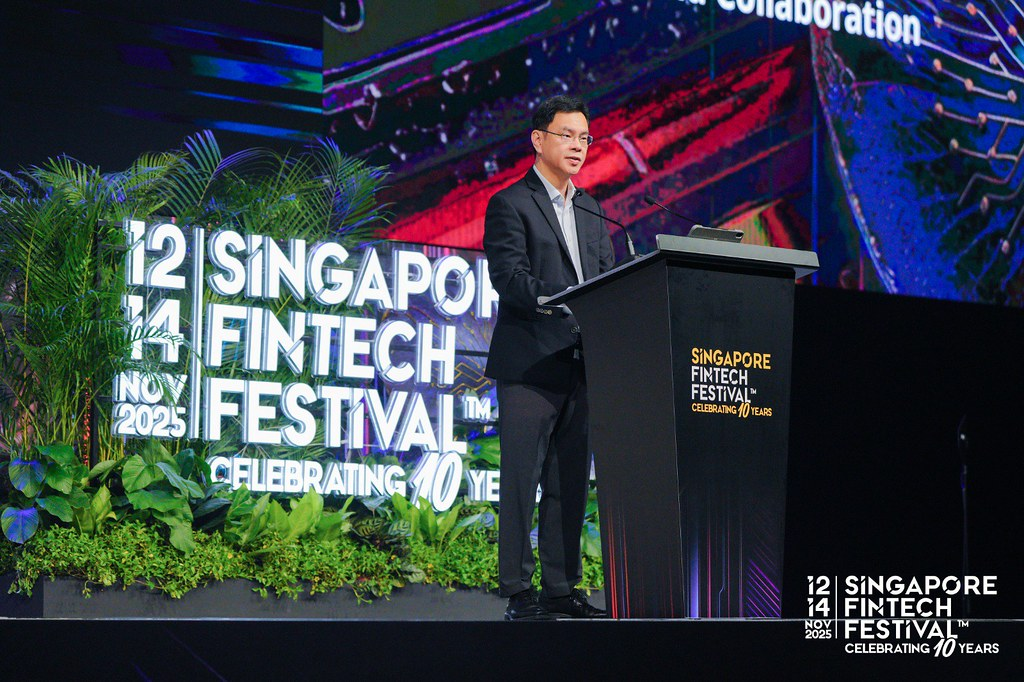
Delivering his remarks at the Singapore FinTech Festival on 13 November, MAS Managing Director Chia Der Jiun said that only fully regulated stablecoins will be suitable for large scale settlement, noting that unregulated tokens have repeatedly struggled to hold their value.
He noted that MAS has finalized the main features of its awaited stablecoin framework and will move to draft legislation that requires strong reserve backing and reliable redemption.
Chia added that if some stablecoins become systemically important, oversight will need to intensify and cross border regulatory cooperation will have to expand.
Singapore Advances Wholesale CBDC Use
Chia said the shift to tokenized finance is pushing the industry to identify safe settlement assets, with market participants currently testing options that include wholesale central bank digital currencies, tokenized bank liabilities and regulated stablecoins.
He added that wholesale CBDCs may eventually act as the system’s stabilizing core, with private settlement assets working alongside them to meet different market needs, but only if they prove to be as robust as the money used in today’s financial system so tokenized transactions can scale globally.
Chia noted that Singapore’s major banks, DBS, OCBC and UOB, have completed overnight interbank lending using the first live issuance of a Singapore dollar wholesale CBDC, adding that MAS will next trial tokenized MAS Bills settled in CBDC, with further details due next year.
MAS Pushes for Common Standards to Prevent Fragmented Token Networks
Chia said tokenization has moved beyond proof of concept trials, with institutions now issuing native digital bonds and offering token based cash management services. However, he noted that broader use will depend on common data standards, interoperable networks and settlement assets that can support value stability.
The regulator cautioned that banks are currently developing separate blockchain networks with different technical specifications, a trend that could fragment liquidity.
To address this Issue, Chia said MAS and a group of global policymakers have published shared frameworks for tokenized bonds, funds and foreign exchange through Project Guardian. He added that the Global Layer One initiative has released templates and principles to help network operators build systems that can work across platforms.
Additionally, Chia said a market infrastructure toolkit containing one hundred and eight controls has been made available to help institutions assess whether a blockchain network meets recognized standards for governance, performance and compliance.
MAS Outlines AI Rules, Sector Usage and Training Needs
Chia said MAS has outlined its plan for the responsible use of artificial intelligence in financial services, proposing guidelines to help institutions manage the risks associated with AI.
He added that AI adoption is expanding across many sectors, noting that more than 30 institutions have set up AI competence centers in Singapore and that the new BuildFin.ai and PathFin.ai platforms will support collaboration and help firms identify validated solutions.
Read More: Canada Targets Emerging Tech in 2025 Budget, Regulates Stablecoins & Invests Nearly C$1 Bn in AI


