




Charles Schwab, with USD 12 trillion in assets under management (AUM), has announced the long-expected launch of its direct spot crypto trading service, Schwab Crypto. To be introduced initially in three phases, for U.S. retail clients purchasing Bitcoin (BTC) and Ethereum (ETH), the two largest cryptocurrencies by market capitalization, the company believes the survey of client preferences has shown that low, transparent pricing, brand familiarity, and asset safety are the top concerns and priorities of people purchasing crypto.
How Schwab Crypto Makes a Difference
On Schwab Crypto, the primary difference is that users will have the ability to trade BTC and ETH alongside traditional investments directly on Schwab.com, Schwab Mobile, and thinkorswim platforms to access their accounts and execute trades.
The commission for each trade will be 75 basis points or 0.75% compared to Fidelity’s fee of 1.00%. Charles Schwab Premier Bank, SSB (CSPB) will act as custodian, while Paxos [an Office of the Comptroller of the Currency (OCC)‑regulated trust] will provide sub‑custody, execution, and settlement. Schwab intends to add additional crypto assets going forward and support deposits and withdrawals, enabling them to move their existing digital assets onto the Schwab platform.
Nevertheless, the launch builds on Schwab’s existing digital asset exposure: clients already hold approximately 20% of spot crypto exchange-traded products (ETPs). The firm also offers crypto futures, options on spot ETPs, and related exchange-traded funds (ETFs).

Earnings and Strategic Context
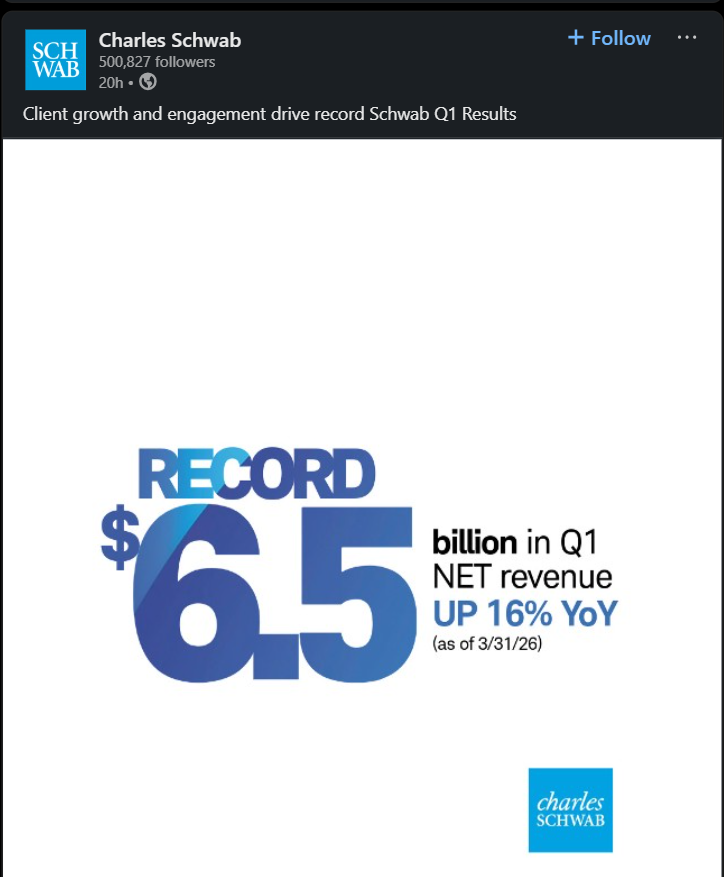
The Q1 earnings for Schwab were up 30% from the same quarter last year due to record daily average trading volumes of 9.9 million trades per day. According to CEO Rick Wurster, the increase in trading-related activity has been connected to geopolitical risks and uncertainty, which has fueled shorter periods between when investors buy and sell stocks. The move to add spot crypto trading at Schwab is viewed as a direct strategy to engage with Generation Z, as they are more willing than any other generation to allocate some of their assets into alternative instruments (including crypto).
Schwab is not alone in pursuing an alternative strategy to investing in digital assets, as it joins a list of other traditional financial institutions, including Fidelity Investments, Morgan Stanley, and JPMorgan Chase, that are blurring the lines between traditional and digital finance.


