





Every sharp price wick, every sudden acceleration through a clean technical level. Beneath the candlestick chart sits a layer of information most traders either ignore or do not know how to read the distribution of leveraged positions sitting at specific price levels, waiting to be forcibly closed. When enough of those positions cluster in the same zone, that zone begins to exert a measurable pull on price.
What a Liquidation Actually Is and Why It Matters for Price
When a trader opens a leveraged position, the exchange assigns a liquidation price. It is the level at which the margin balance falls below the maintenance requirement and the position is forcibly closed as a market order. A single liquidation barely moves the price. But when hundreds or thousands of positions share a similar liquidation range, those simultaneous market orders generate immediate directional pressure.
The direction determines the mechanics. Long liquidations force the exchange to sell the asset, pushing the price lower into the next group of long liquidation thresholds, which triggers another round of forced selling. Short liquidations work in reverse: forced buybacks push price higher into the next cluster of shorts above. In both cases, concentrated leverage becomes a self-reinforcing engine once price enters the zone.
On October 10, 2025, a single session witnessed the liquidation of over $19 billion in leveraged positions, marking the largest such event in crypto history. In September 2025, $1.6 billion of a single day’s $1.7 billion in total liquidations came exclusively from long positions. These are structural features of a market where derivatives account for approximately 75–80% of total crypto trading volume, not outlier events.
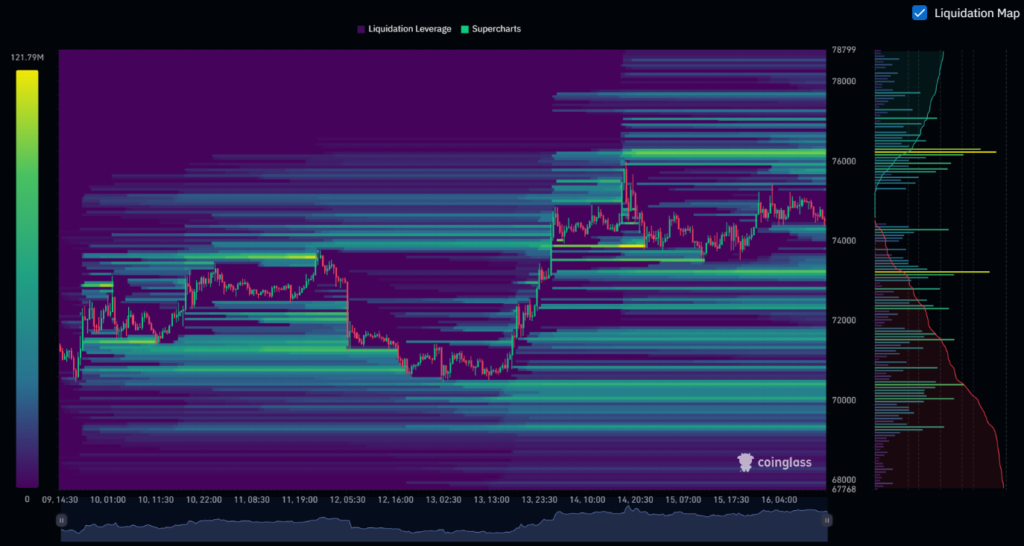
CoinGlass BTC Liquidation Heatmap Yellow bands indicate zones of maximum liquidation density. Price tends to gravitate toward these zones before reversing. Blue/purple areas indicate thin liquidation exposure, where price moves more freely.
The Color Code: Reading Density Before Price Gets There
The CoinGlass Liquidation Heatmap is the most widely used free tool for visualizing this data. It aggregates position and leverage data from Binance, Bybit, OKX, and other major exchanges and renders the output as a color-gradient overlay on the price chart. The vertical axis represents price levels. The horizontal axis represents time. The color at any given price-time coordinate represents the estimated density of liquidation exposure at that level.
The color scale runs from dark purple at the low end to bright yellow at the high end. Dark purple indicates minimal liquidation exposure; the price can move through these zones quickly and without significant reaction. As the color intensifies toward orange and yellow, the concentration of liquidation risk increases. A bright yellow band on the heatmap represents the maximum estimated density, meaning a large volume of leveraged positions share a liquidation price within that narrow range.
What Makes a Zone Magnetic
The term “magnet zone” is specific. A liquidation cluster becomes magnetic not simply because positions are concentrated there but because that concentration creates an incentive structure that draws market participants toward it. Large institutional traders and algorithms require liquidity, a sufficient available volume, to execute significant position entries or exits without moving price against themselves. Dense liquidation clusters generate that liquidity at the moment they are triggered, because forced market orders from liquidated positions flood the book simultaneously.
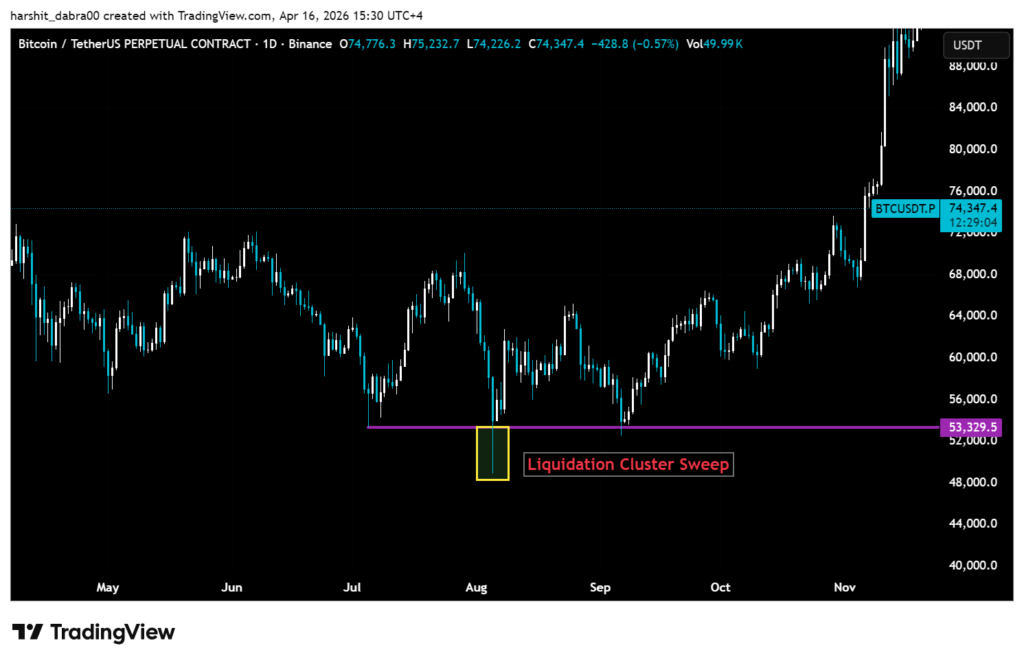
The period from late July 2024 through August 5, 2024 is ideal (BTC fell sharply through long clusters into the $49,000–$53,000 range before bouncing). This is the annotated example of a liquidation cascade sweep where Price moves into the dense cluster, liquidations fire in sequence, and the cascade accelerates the move, and once the cluster is exhausted, selling pressure dissipates and price reverses. The reversal is a consequence of the cluster clearing, not an independent technical event.
A Documented Example From December 2024
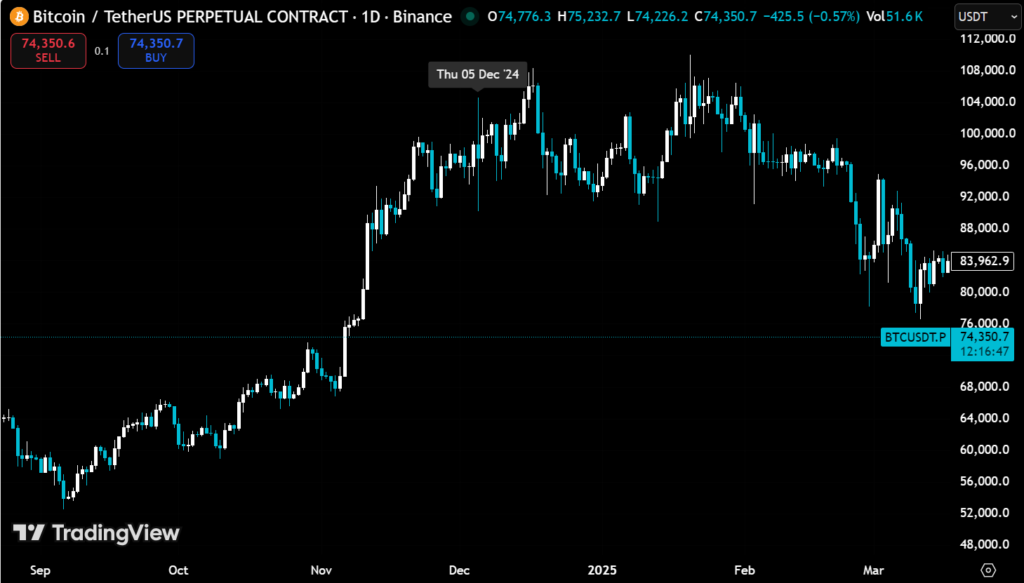
The December 5, 2024 BTC session provides one of the cleaner documented examples of a liquidation cascade playing out at a major psychological level. Bitcoin reached an intraday high of $103,900, its first sustained push above the $100,000 threshold, a level that had attracted months of accumulated long positioning. The enthusiasm around that level meant a significant concentration of leveraged long positions had been established in the $99,000–$103,000 range, with many traders placing liquidation buffers just below the $100,000 mark.
When the price reversed from $103,900, the descent through $100,000 entered a dense, long liquidation cluster. Forced selling from those positions accelerated the move. Within the session, Bitcoin dropped to $97,000 which was a decline of approximately 6.6% from the high, with total liquidations in Bitcoin positions exceeding $565 million, pushing aggregate crypto liquidations across all assets past $1 billion for the session.
The October 2025 Case: When Clusters Stack Across the Entire Book
The October 10, 2025 event is the most structurally significant recent example of what happens when liquidation clusters accumulate across multiple price layers without being cleared incrementally. In the nine days preceding October 10, Bitcoin rose from approximately $109,000 to $126,000. During that same window, total open interest across crypto derivatives expanded from roughly $38 billion to over $47 billion, a $9 billion increase in leveraged exposure in under two weeks.
The rapid price appreciation outpaced the normal process of cluster formation and clearance, meaning the heatmap below the current price had accumulated multiple dense, long liquidation clusters layered at successively lower levels. When the price reversed, it did not encounter a single cluster and stabilize. It moved through the first cluster, the cascade accelerated, and the falling price entered the next cluster below, triggering a second round of forced selling that pushed into the third cluster.
Each cluster added fuel to the move rather than providing support. Open interest fell by more than $70 billion in a matter of days, and the total liquidation figure for the event exceeded $19 billion. The cascade did not stop at one level because there was no gap between the clusters large enough to absorb the selling pressure.
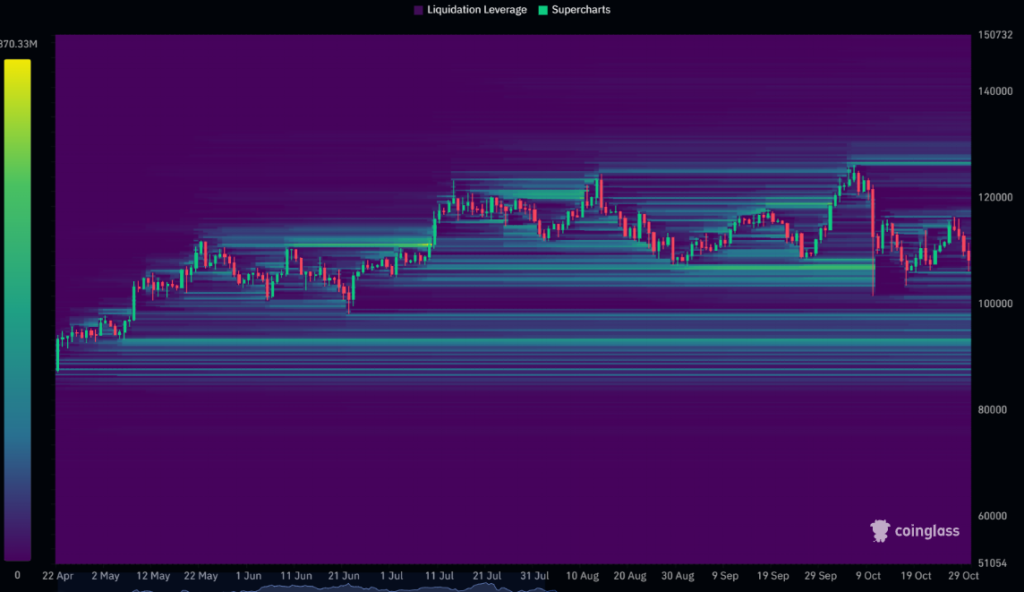
Stacked liquidation clusters with minimal spacing between layers are the most dangerous structural condition on the heatmap. Rather than absorbing price, each cluster adds momentum to the downward move. The cascade endpoint is typically found in the first large low-density gap below the stack.
How to Use This in Practice
For entry positioning: before entering a leveraged long position, verify whether a yellow cluster sits within 3–5% below the intended entry. If it does, the position is being opened directly in front of a potential cascade zone that may sweep the stop-loss before the thesis plays out. Positioning the entry below the cluster, in the low-density gap beyond it, removes the position from immediate structural risk.
For stop-loss placement, stops placed inside a visible yellow cluster are almost certain to be triggered by structural necessity alone, regardless of whether the directional thesis is correct. Stops belong in low-density zones beyond the cluster, where price is unlikely to reach unless the trade has genuinely failed.
For price targets: yellow clusters in the direction of the move serve as realistic near-term targets. A dense, short liquidation cluster above the current price signals that a move into that zone will produce a squeeze, adding momentum. That cluster’s location is a more precise take-profit reference than standard Fibonacci levels alone.


