





The UK Financial Conduct Authority (FCA) has recently published a consultation (CP26/13) on guidance for its future crypto regime, following the statutory instrument passed in Parliament on 4 February 2026. The regulator is seeking feedback on its interpretation of seven regulated cryptoasset activities, including issuing qualifying stablecoins, operating trading platforms, dealing and arranging deals in qualifying cryptoassets, safeguarding, and staking.
How the Crypto Regime Will Work
The FCA has chosen an activity-based perimeter rather than licensing entire firms, meaning the proposed approach to implementing a regulatory framework is based on the activities carried out and not on the approval of a company for all of those activities; therefore, it is more flexible than an entity-based licence while still being consistent with the current taxonomy of centralized finance (CeFi). An entity will be able to submit an application for approval from September 2026 and will not be able to trade in crypto until the new framework is in place on 31 October 2027.
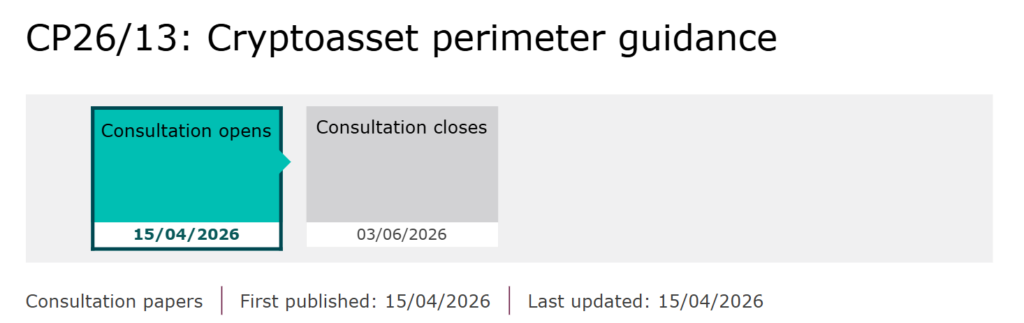
The consultation is also expected to become formal rules during the summer of 2026. The FCA has indicated that there will be further guidance regarding the implementation of the new crypto regime throughout the autumn of 2026. This new regime will include authorization, prudential capital, conduct rules, and market abuse surveillance. However, there are still concerns regarding the risks generated from the technology itself (e.g., cross-protocol flooding, silos offshore), so the FCA will continue to consult with the Decentralized Finance (DeFi) community and additional firms that use distributed ledger technology, incorporating functional resilience rules.
Anticipated Developments
Until the new crypto regime system goes into effect, crypto will be largely unregulated in the United Kingdom; however, there are exceptions for financial promotions and for anti-money laundering (AML) purposes (fraud). The FCA cautions people that, as with all types of high-risk financial products, that they should only invest an amount that they can afford to lose, a very basic investment rule.


