


Centrifuge’s latest release, v3.2, introduces the Onchain Portfolio Manager (OPM), a significant enhancement in its institutional platform, in which users can now use an all-in-one vault that allows an asset manager to have tokenized treasuries, credit instruments, equity securities, and onchain lending positions along with ongoing rebalancing, onchain executions, and unified accounting to manage their respective assets.
How the Onchain Portfolio Manager Works
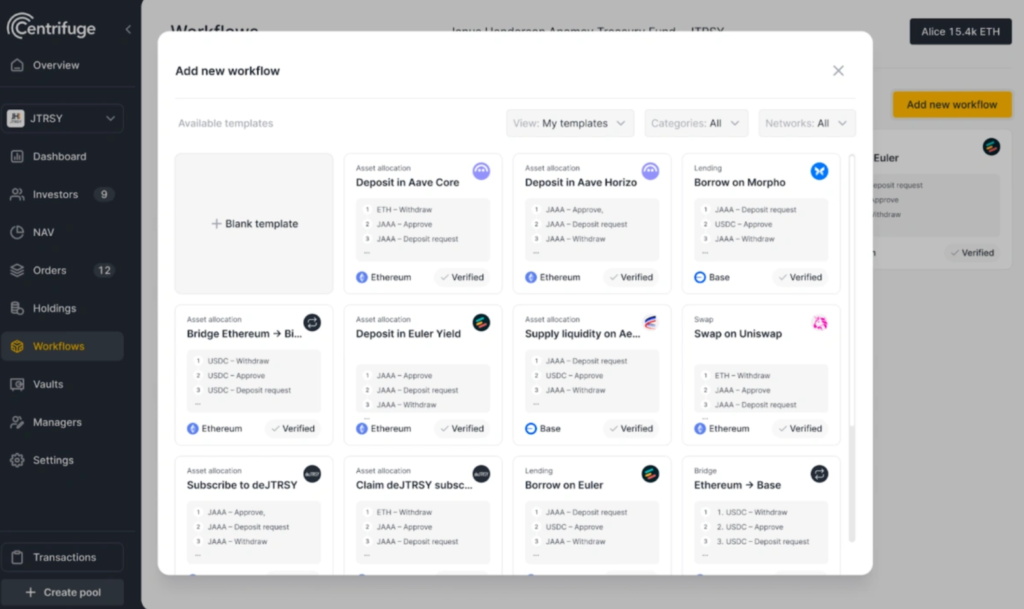
The Onchain PM is designed to function within Centrifuge’s 10 network hub-and-spoke architecture, where a single hub is responsible for the accounting, net asset value (NAV), and permissions of all onchain deployments. Asset managers can select, customize, and deploy multiple step workflows within the OPM (i.e., make a deposit into Aave, borrow through Morpho, bridge ETH to Base, and swap on Uniswap) as a single auditable transaction through a specially designed asset management application.
Authorization and security are established via a Merkle tree-based system where all workflows must be pre-authorized, and execution wallets are unable to modify the order of actions or change the address being used for execution without invalidating the proof of the transaction. Also, runtime safety measures are in place to provide slippage protection, validation of allowable amounts, and circuit breakers that are intended to limit the cumulative amount of crosschain volume.
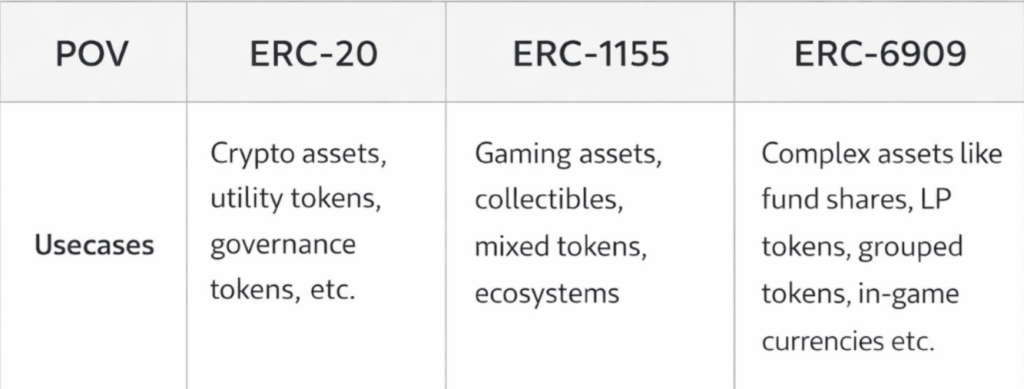
Most significantly, the Centriguge v3.2 software adds an entirely new type of accounting asset, ERC-6909 Tokens (a new minimal and gas-efficient Ethereum standard designed to handle multiple semi-fungible tokens), also called “onchain receipts” for assets that are currently being transferred from one blockchain to another. To this point, when a token is crosschain bridged, a receipt token is created/minted in its place. When they arrive at the new blockchain, a corresponding liability token is added to the chain records, and both are valued identically to the underlying asset, keeping NAV consistent between chains while the transaction is pending.
The Onchan PM Unifies Systems
Before v3.2, running an institutional fund on the blockchain was accomplished by combining many different tokenization platforms, creating customized Decentralized Finance (DeFi) Contracts, manual processes to move assets crosschain, and off-chain recordkeeping systems. With the introduction of the Onchain Portfolio Manager, all of these fragmented systems are consolidated into one audited system (or railway), allowing for an asset manager to allocate investment from their tokenized fund to any DeFi protocol on any supported chain, implement sophisticated multi step fund allocation strategies, and have a common NAV throughout all of their investments, and all without bespoke engineering.
What Comes Next?
The Onchain PM has finished its last security review before going live. Together with Centrifuge’s Management App, transferring invested and redeemed funds, as well as setting prices for real-world asset (RWA) tokens, will become a single operation rather than multiple phases within various platforms.
Centrifuge (CFG) Token Price
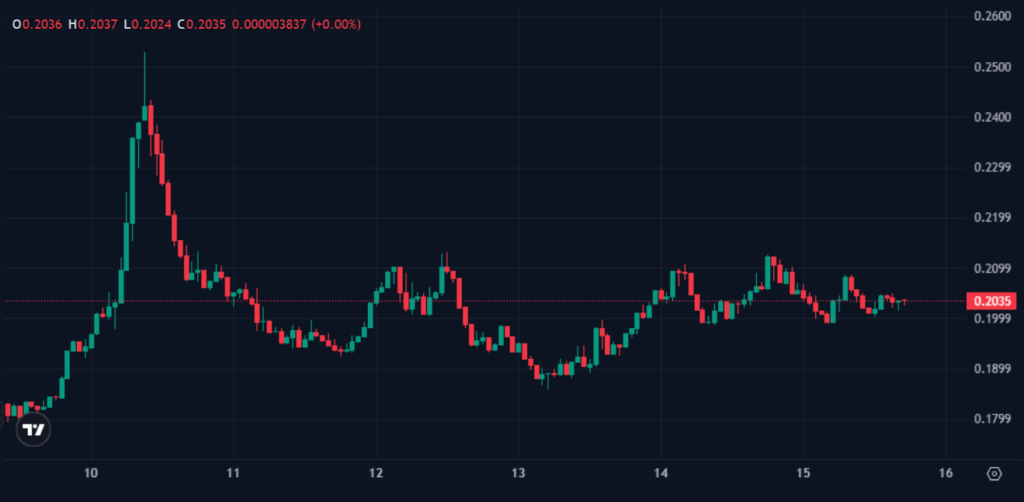
The native Centrifuge token (CFG) tends to move in correlation to the broader RWA space, although it remains very much smaller than its typical competitors (i.e., Ondo Finance). Trading around USD 0,20 at the time of writing, has been pushed down in line with the overall market, after reaching its highest price in the year of USD 0,26 following its listing on major exchanges. So far, it maintains short term accumulation in an upward trend since last year.