





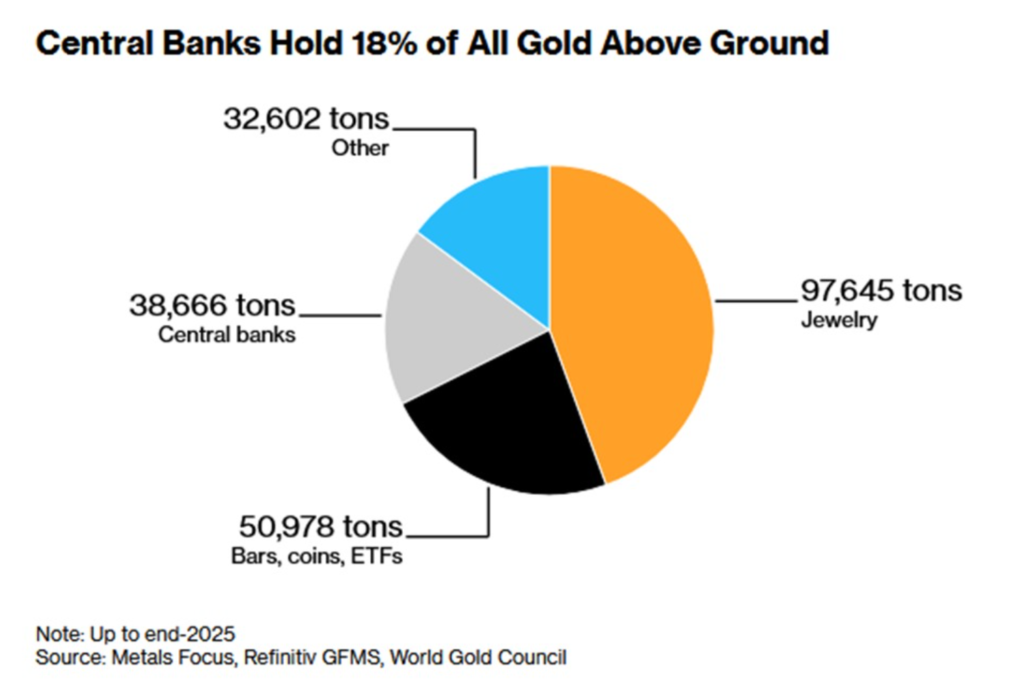
Recent data demonstrates that central banks have become key operators within the global Gold markets. Central banks now hold an estimated 38,666 tons (approximately 18% of total mined Gold) in their reserves as a result of their activities in these markets. On the other hand, jewelry is still the largest use of Gold, constituting 43% of the total gold supply. This significant amount of Gold is located primarily in countries such as India and China, where, in addition to being used for decorative purposes, it is also used to support the financial system.
Investment in bars, coins, and exchange-traded funds (ETFs) makes up another 23% of the total used as a ‘store of value’. The last category makes up about 14%, attributed to both industrial use and private reserves not classified under any of the other head categories.
Gold Accumulation
The amount of Gold being purchased has accelerated at an incredible pace. After 17 months of consecutive purchases, the People’s Bank of China (the central bank of China) has now joined many other countries, including Poland and India, in buying more and more gold. This is due to the central banks looking for assets that do not rely on any single government issuer, especially as the use of the dollar as a sanctioning tool has driven diversification, particularly among emerging economies.
Central banks’ Gold holdings have exceeded their holdings of Treasury bonds for the first time since 1996. The record high price for Gold in January 2026 reflects a phenomenon, combined with the reduced appeal of Treasuries in a high-interest-rate environment (rising interest rates increase the nominal return, but also create an unrealized loss in the bond portfolio).
Gold Prices and the War Context
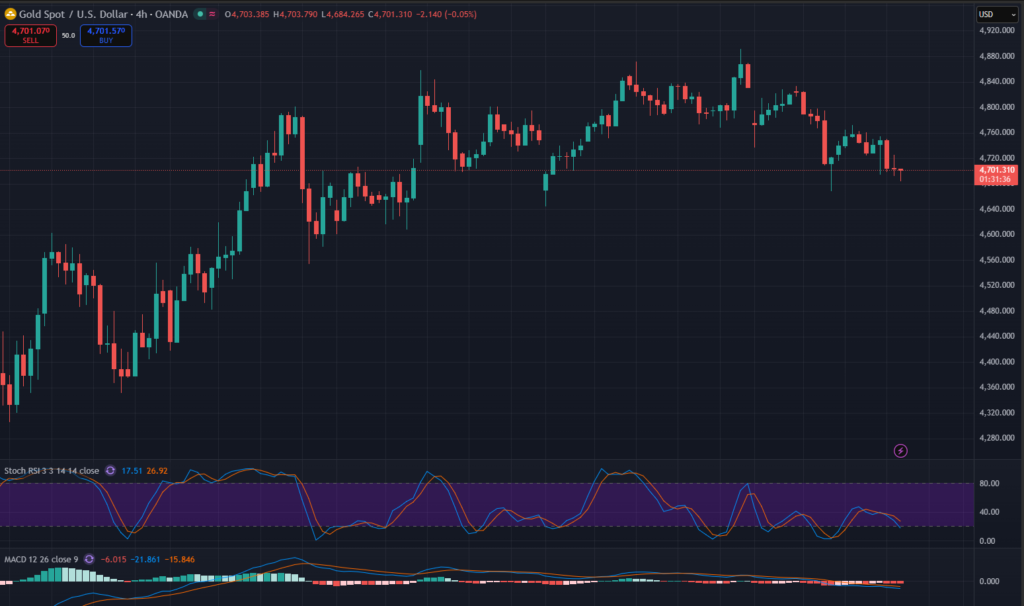
In March 2026, Gold traded between USD 5,400/ounce; this is due to the increase in price during the U.S.-Iran conflict, and as a safe instrument for investments. The blockage of the Strait of Hormuz is a major contributor to both retail and central bank demand. In addition, Gold has a tendency to be a crisis hedge and has consistently performed well during the conflict, whereas Bitcoin’s relationship with risk assets has been volatile.
But, despite Gold being safe through market uncertainty, it has lost around 25% in just 20 days in the middle of the war, reflecting that it can also crumble in hard moments, which can spill even more fire on a volatile market. Gold is trading around USD 4,700 at the time of writing,
Moving Forward
In the next few months, central banks in BRICS nations (Brazil, Russia, India, China, and South Africa coalition) and every other country trying to lessen dependence on the dollar will continue to have strong central bank demand for Gold. The trend of swapping out treasury bonds for this precious metal will create downward pressure in U.S. bond markets while supporting higher prices. On the other hand, jewelry demand (the largest category) may soften if record prices suppress consumption in price-sensitive markets like India.


