




RAVE price has turned into one of the market’s sharpest stories after a weekly gain above 2,000% pushed the token into focus. The move has been fast, steep, and difficult to ignore. Traders now watch whether RaveDAO (RAVE) price can break above $20 or whether the latest surge will lose force after such an extreme climb. The rally has already changed the token’s profile, yet the next phase may prove even more important than the breakout itself.
RAVE Price Rally Shifts From Breakout to Vertical Expansion
RAVE’s latest move has pushed far beyond the look of a typical breakout. RAVE Price has accelerated into a near-vertical rally as momentum builds around leveraged activity and scarce token supply. During the past four months, RAVE has gained over 12,000%, putting it among the strongest and most aggressive performers in the market.
Besides the raw percentage gains, the structure tells an important story. RAVE price did not grind higher through steady accumulation. Instead, it exploded after pressure built on both sides of the market. Once the token cleared major resistance, price moved into open space. Consequently, buyers gained control and pushed the rally higher with little friction.
Short Covering Lit the Fuse
The early part of the rally appears linked to a powerful short squeeze. Before the breakout, there was a lot of bearish positioning. When the RaveDAO price started to go up, short traders had to get out right away. That forced buying made an already strong move even stronger.
Short squeezes often create the first violent leg in a rally. However, they do not always explain the full trend. In RAVE’s case, the move did not stop after the initial squeeze. Volume kept rising, and open interest also expanded. That combination suggests fresh participation entered the market after the squeeze began.
This distinction matters. A simple squeeze can fade once liquidations end. A rally with new positioning can travel farther. Even so, it also becomes more fragile when leverage builds too quickly. Hence, the current setup reflects both strength and instability at the same time.
Volume, Open Interest, and Funding Show a Heated Market
The strongest rallies usually leave clear signals in trading activity. RAVE price did exactly that. Volume surged as the token pushed through resistance. Open interest also jumped, which points to new money entering rather than only old shorts closing positions.
Source: Coinglass
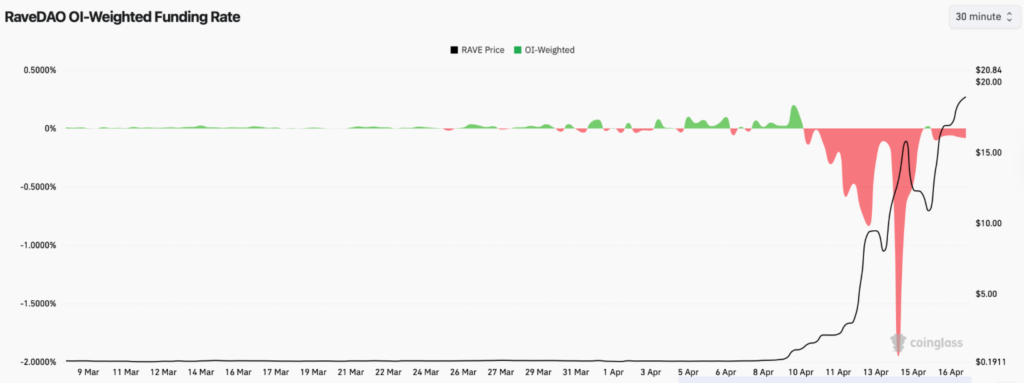
Additionally, the funding structure adds another layer to the story. Funding stayed deeply negative during the buildup phase, which aligned with the earlier bearish bias. That condition helped create the squeeze. Now, funding has turned more volatile. The shift shows that positioning has become reactive and less balanced.
A volatile funding backdrop often means traders are chasing each move instead of building conviction. That can extend momentum for a while. However, it also increases the chance of abrupt reversals. When the market relies too heavily on leverage, even a small pullback can trigger more liquidations and deepen the drop.
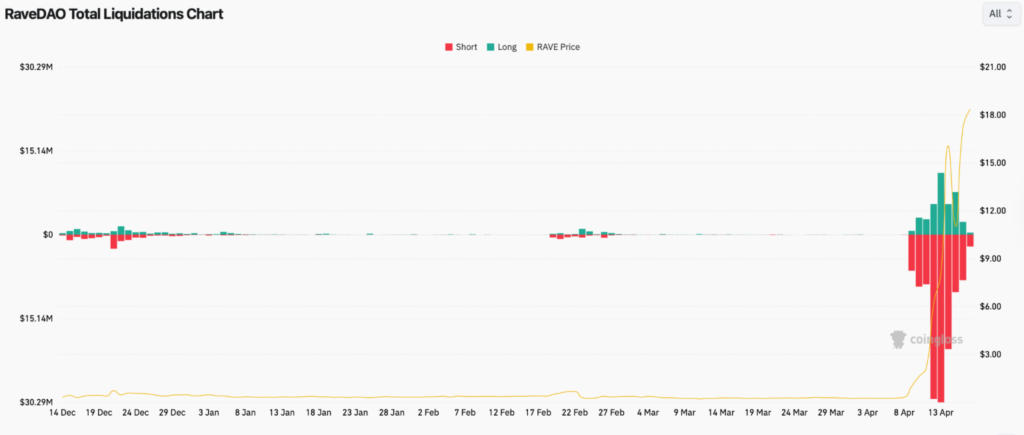
Recent liquidation data support that risk. Earlier, short liquidations drove the advance. Now, long liquidations have started to increase. That change suggests late buyers are entering at stretched levels. Moreover, those entries usually weaken trend quality because they depend on continued price acceleration.
Source: Coinglass
KuCoin Listing Added Fresh Fuel to the Move
A fresh spark came from RAVE’s new KuCoin listing. Listings like this usually put a token in front of more traders, improve access, and increase short-term activity. For RAVE, that development arrived at exactly the right moment. The market was already under pressure, so the added attention gave the existing rally another push.
A broader exchange presence can support a healthier market over time. It can bring in more trading activity and help price action become more balanced. Even so, a listing does not remove the bigger risks. RAVE still trades with a tightly managed supply, and a large share of tokens remains concentrated in a small number of wallets.
That limited float has played a major role in the rally. When supply stays restricted, even moderate demand can move price sharply. Consequently, thin liquidity has allowed RAVE price to travel farther and faster than it otherwise would.
RAVE’s supply structure remains one of the biggest issues behind the current rally. More than 48% of all tokens are held by the top four wallets.
Messari data also shows that more and more people are paying attention to the token, with mindshare reaching 0.1%. At first glance, that number might not seem very big. But for a new token, it shows that it is becoming more visible quickly. Also, strong social attention can keep things going longer than technical models think they will.
Bulls Face the $18 to $20 Barrier
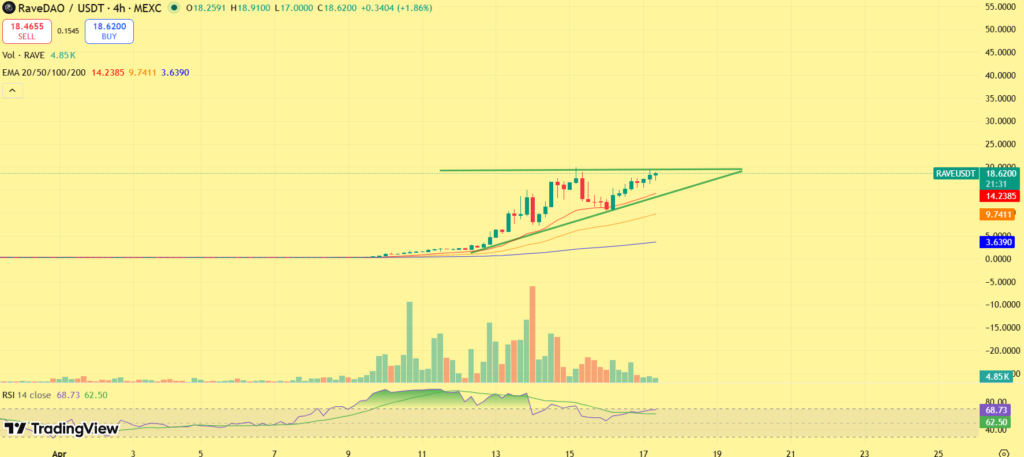
The next major area sits between $18 and $20. After the last vertical push, this area is now acting as immediate resistance. For the rally to keep going, bulls need to break out of that range cleanly. If they are successful, the RAVE price could enter a discovery phase with fewer visible obstacles above it.
RAVE/USD 4-hour price chart: Source: TradingView
But resistance often gets stronger after a move that goes one way. Traders who got in earlier may want to take their profits close to round numbers. At the same time, new buyers might not want to chase after such a big run. Because of this, this area could cause the first serious rejection in days.
On the downside, the $12 to $14 area now serves as the first meaningful support. That region aligns with the recent breakout base and marks an important line for trend control. If bulls defend that range, the broader structure can stay intact.
RAVE Price Holds Strength, but Fragility Keeps Rising
RAVE price remains one of the market’s most explosive short-term stories. The token has benefited from a short squeeze, rising open interest, expanding visibility, and a favorable listing catalyst. Moreover, its controlled supply has made each wave of buying more powerful.
However, the same ingredients that lifted the rally also create risk. Leverage now plays a larger role. Long liquidations have started to appear. Funding has turned unstable. These signs do not guarantee a reversal, but they show a market that now depends heavily on sentiment.


