





Qualcomm shares soared around 10% in premarket trading after analysis by TF International Securities’ Ming-Chi Kuo indicated that OpenAI is also taking a proactive approach to developing hardware. The AI firm is said to be developing a dedicated OpenAI smartphone with a radical new interaction model. This means users will not navigate a grid of applications, but rather through an AI agent who will manage their requests (e.g., book transportation, compare flight options) using natural language.
The OpenAI Smartphone Development Phase
To build their smartphone, OpenAI would need to take full control of the software operating system and the hardware processor. Kuo states this is the only way OpenAI could provide a seamless proactive AI service (its agent service) if they own the hardware behind the device. OpenAI would also need this control because the device would continuously gather information about the user’s ‘state’ (i.e., their physical position; their work schedule; their daily routines, etc.) to proactively engage users with AI assistance.
From a technical perspective, the processors within the device will need to balance two conflicting requirements:
1) The power efficiency required for AI on device (i.e., privacy concerns; low latency).
2) The bandwidth required to access cloud-based AI to perform complex computing tasks.
For Qualcomm and MediaTek, this collaboration has the potential for a sizable “replacement cycle” as high-end users purchase new AI-enabled devices. For Luxshare, this partnership also provides a major opportunity to become a significant manufacturer of the next generation of smartphones in the coming years.
Key OpenAI Smartphone Characteristics
- AI agent-first interface (no traditional apps)
- Custom chip co-developed with Qualcomm and Mediatek
- Mass production planned for 2028 with 300-400 million units annually
- Luxshare is the manufacturing partner
- Continuous context awareness
- Hybrid AI processing
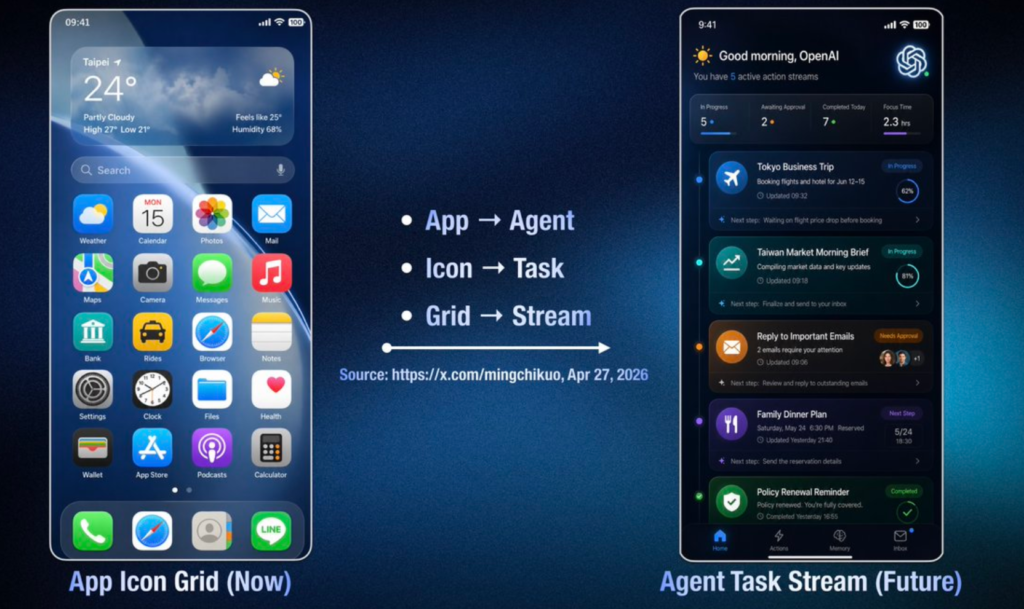
Implications for the Smartphone Market
This could trigger a major replacement cycle as high end users upgrade to AI native hardware. It also challenges the app-store-centric model that has dominated mobile computing for over a decade.
While OpenAI has yet to officially confirm the project through its own platform, the reported 2026/2027 timeline for finalizing specifications suggests the project is now in advanced planning stages, separate from its ongoing AI device development with Jony Ive, that consist in a screenless, AI-powered hardware device, seeking to redefine human-computer interaction.
Qualcomm Stock Surge
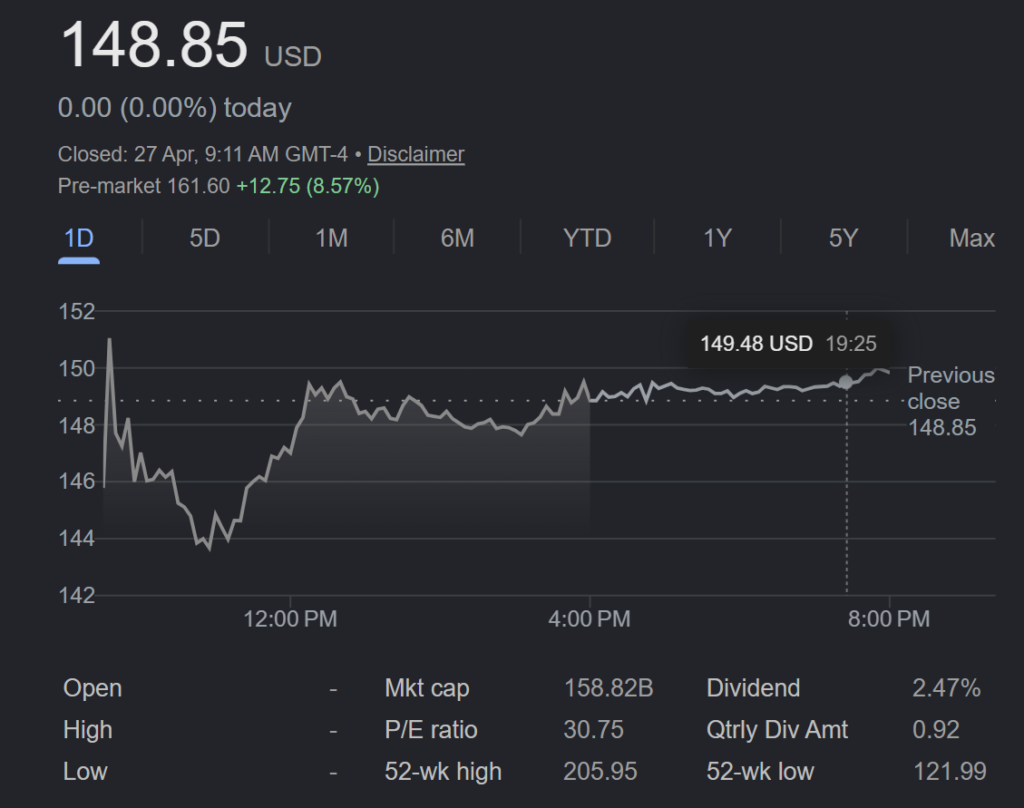
Qualcomm Inc. (NASDAQ: QCOM) has surged 11-13% pre-market, in the last 5 days, following the announcement of the OpenAI Smartphone launch and the partnership with Mediatek. Trading at USD 148 at the time of writing, there’s optimism, in line with the broader semiconductor rally.


